Biomedical imaging seeks to reveal biological structures and processes across a wide range of spatial and temporal scales. However, tradeoffs among imaging depth, resolution, speed, sensitivity, and accessibility often limit the information that conventional systems can capture.
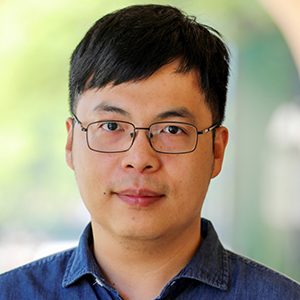
Yide Zhang,
University of Colorado Boulder
In this seminar, I will present our efforts to address these limits by combining light, sound, and entanglement. I will first discuss photoacoustic computed tomography methods for high-speed three-dimensional imaging of biological structures and functions at depth, along with ongoing efforts to improve their sensitivity, scalability, and range of biomedical applications. I will then introduce ultrafast imaging methods that capture the propagation of light, sound, and biological signals at time scales beyond the reach of conventional cameras. These methods provide new ways to observe rapid physical and biological events and study how signals travel through complex systems. Finally, I will present quantum imaging approaches that use entangled photons to improve spatial resolution, suppress noise, and recover information that conventional measurements cannot readily access. Together, these approaches show how advances in physical principles, sensing >hardware, and computation can extend biomedical imaging across spatial and temporal scales.
Dr. Yide Zhang is an Assistant Professor of Electrical, Computer & Energy Engineering and Biomedical Engineering at the University of Colorado Boulder, where he directs the Boulder Optical Laboratory for Translational Science (BOLTS). His research focuses on developing biomedical imaging technologies that overcome current limits in depth, speed, resolution, sensitivity, and accessibility. Dr. Zhang earned his Ph.D. in Electrical Engineering from the University of Notre Dame, where he advanced multiphoton fluorescence lifetime imaging, super-resolution microscopy, and machine learning approaches for disease diagnosis. He also created the first microscopy denoising dataset, which now serves as a benchmark for image restoration. As a postdoc at the California Institute of Technology, he developed photoacoustic methods for single-shot three-dimensional imaging and ultrafast techniques for visualizing rapid biological and physical processes in real time. His quantum imaging work used spatial and polarization entanglement to improve spatial resolution and signal-to-noise ratio. At CU Boulder, BOLTS works at the intersection of optics, acoustics, quantum science, and biomedical engineering. Its research spans photoacoustic instruments ranging from portable devices to high-performance volumetric platforms, high-speed quantum imaging systems, and ultrafast methods for visualizing biological and physical dynamics. These efforts aim to translate fundamental discoveries into new diagnostic and therapeutic tools. Dr. Zhang holds multiple patents and has received the Seno Medical Best Paper Award, the Hitachi High-Tech Best Presentation Award, and the JenLab Young Investigator Award. He also received the NIH K99/R00 Pathway to Independence Award.