The electromagnetic spectrum supports many diverse applications beyond commercial broadband access, including radar, atmospheric sensing, radioastronomy, and defense systems. In recent years there has been increasing pressure on regulators to ensure the availability of spectrum resources to meet the accelerating demand for wireless access to broadband services. This has motivated the design of systems and protocols that facilitate spectrum sharing across diverse applications.
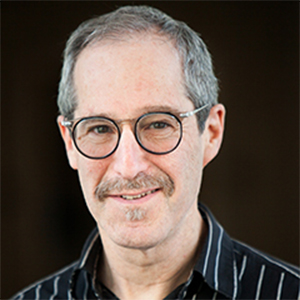
Michael Honig,
Northwestern University
We discuss two scenarios in which signal processing techniques can facilitate more effective spectrum use: the Citizens Broadband Radio Services (CBRS) band in the US, where entrant broadband service providers share spectrum with incumbent naval radar systems; and entrant broadband OFDM cellular coexisting with incumbent airborne radar. In the first scenario we discuss the use of beacon signaling to alert the entrant about incumbent activities, and in the second scenario we present methods for detecting the presence of a radar signal based on adaptive beamforming. We include a discussion of related challenges and controversies faced by regulators when formulating spectrum policy.
Michael Honig is a Professor in the Department of Electrical and Computer Engineering at Northwestern University. Prior to joining Northwestern he worked in the Systems Principles Research Division at Bellcore in Morristown, NJ, and at Bell Laboratories in Holmdel, NJ. He recently served as the research director for SpectrumX, a spectrum innovation center funded by the US National Science Foundation. He received the B.S. degree from Stanford University and the Ph.D. degree from the University of California, Berkeley, both in electrical engineering. He is a Fellow of IEEE and the recipient of a Humboldt Research Award for senior U.S. scientists.